History
From salon to saloon
How magic moved from fairgrounds to Paris theatres, vaudeville and the music hall, and why a saloon-styled room on a Texas plaza fits that story.
Find a show night ↗An old art
Wikipedia counts magic among the oldest performing arts in the world, and the word itself goes back to the Greek mageia, from the name Greeks gave to Persian priests. For centuries conjurors worked under suspicion, linked in the popular mind to the devil and the occult. One of the earliest books to explain how tricks were really done, Reginald Scot's The Discoverie of Witchcraft, appeared in 1584 and set out to show that such feats needed no supernatural help.
Fairs and patrons
Until the 18th century, most people saw magic at fairs, where itinerant performers shared the crowd with sword swallowers, jugglers and fire breathers. As belief in witchcraft waned, the art became respectable, and shows were put on for wealthy private patrons. The English showman Isaac Fawkes advertised his act from the 1720s, describing eggs, gold and live birds conjured from an empty bag. From 1756 to 1781 Jacob Philadelphia toured Europe and Russia, sometimes presenting his feats as scientific exhibitions.
The theatre arrives
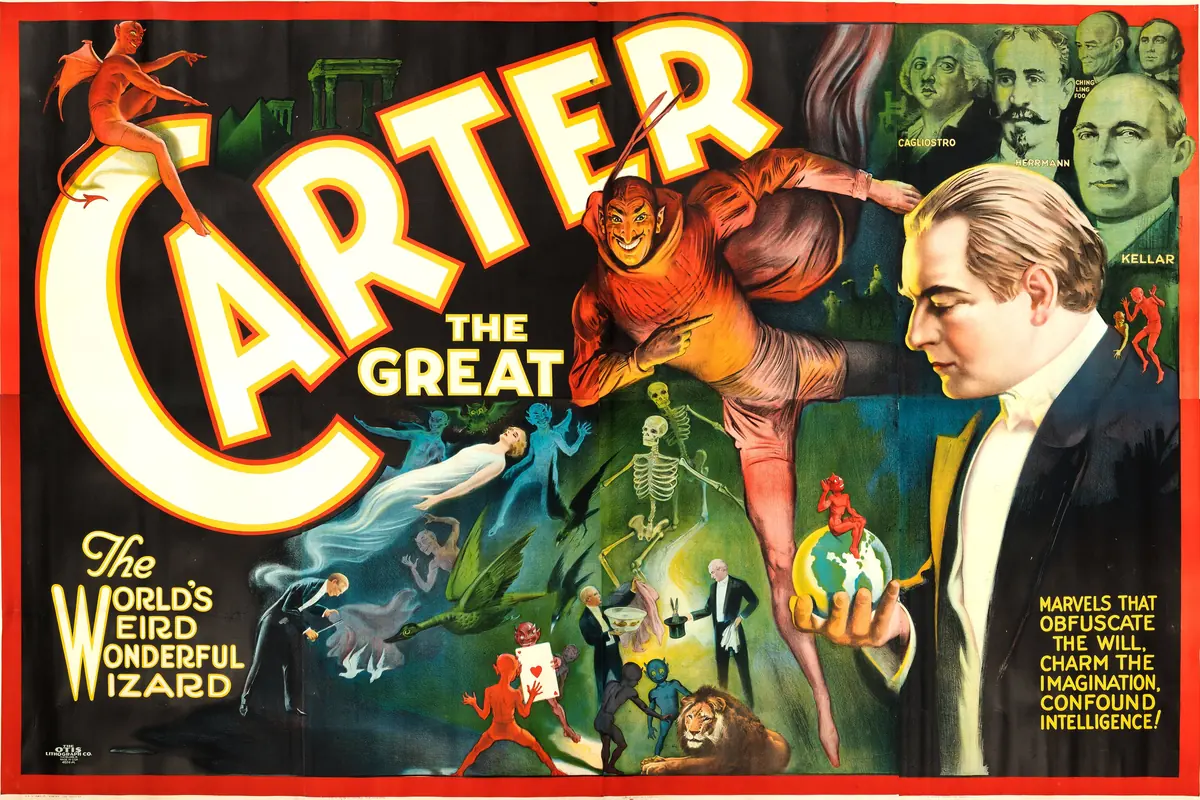
The great change came in the 1840s. In Paris in 1845, the French clockmaker Jean-Eugène Robert-Houdin launched a theatre devoted to magic and turned a fairground pastime into an entertainment the public paid to see in a theatre; he is widely called the father of modern conjuring. In London, John Henry Anderson was making the same move, opening the New Strand Theatre in 1840 as the Great Wizard of the North. The tailcoat that many magicians still wear is part of Robert-Houdin's legacy.
The golden age
By the end of the 19th century, big magic shows were staged permanently in large theatres. John Nevil Maskelyne and his partner Cooke were established at the Egyptian Hall in London's Piccadilly in 1873 and stayed for 31 years. Across the decades either side of 1900, magic was a regular part of Broadway, vaudeville and music-hall bills, a period known today as the Golden Age of Magic, and Harry Houdini took his stage name from Robert-Houdin.
Parlour, platform, cabaret
Parlour magic is the name for the middle scale: shows for audiences larger than a close-up crowd and smaller than a stage production, usually performed standing and level with the seats. The term has its critics. Many magicians find it old-fashioned, since the work is often done in rooms far larger than a parlour, and suggest platform, club or cabaret instead. Whatever the label, most working magicians perform at this scale. Unlike stage illusionists, who may travel with a crew, parlour performers generally work without assistants, which is why the volunteer from the audience matters so much.
And the saloon
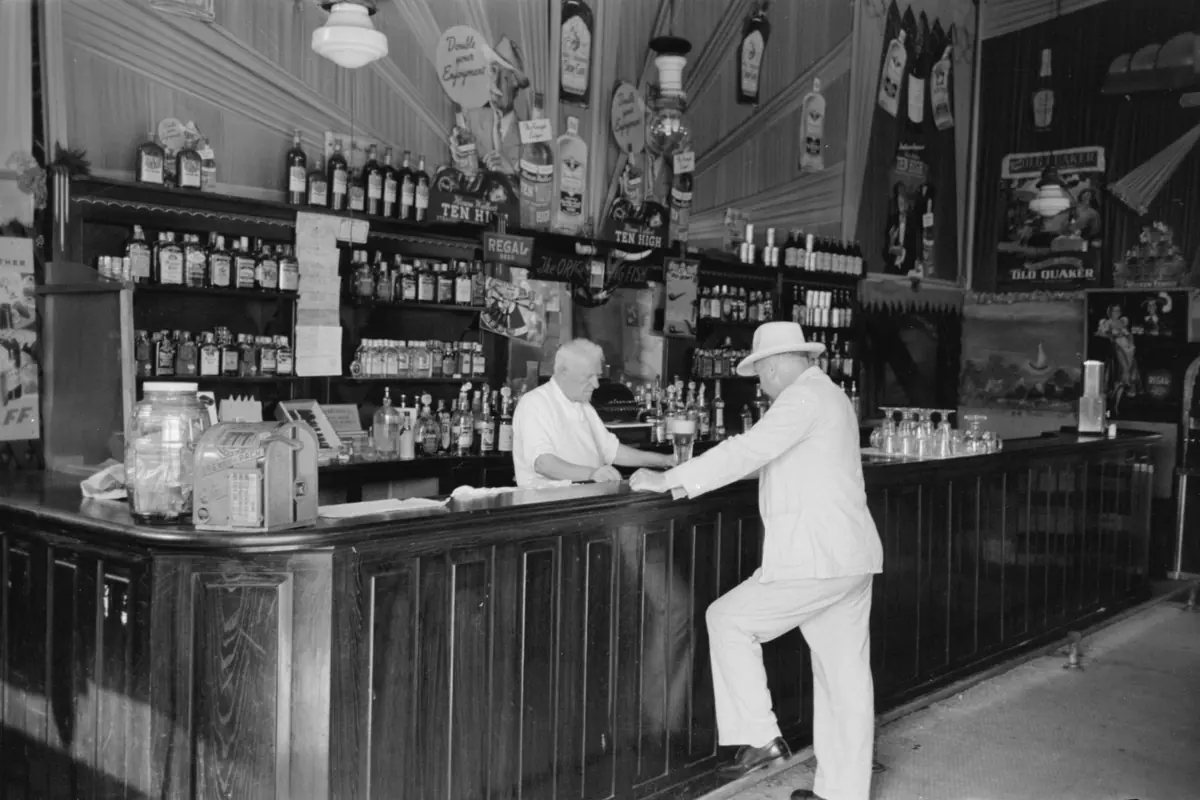
The Western saloon was a bar particular to the Old West, serving trappers, cowboys, soldiers, miners and gamblers, and often known by its pair of batwing doors. The word started out as a variant of the French salon, a large hall for receiving guests, and had settled into its American meaning by 1841. So a magic theatre dressed as a saloon on a Texas plaza joins two threads of the same story: the drawing room where parlour magic grew up, and the frontier bar that borrowed its name.
Frequently asked questions
Who is called the father of modern magic?
Jean-Eugène Robert-Houdin, a French clockmaker whose Paris theatre of magic dates from 1845.
Where does the word saloon come from?
It began as a variant of the French salon, a large reception hall, and had its present American meaning by 1841.
Sources